Traffic rules
Traffic rules: DGT questions manually reviewed in July 2026. Free, no sign-up, with instant feedback.


Loading test...
Questions and answers in this test
20Show the answersHide the answers
Review every question in this test with its correct answer and explanation.
Question 1As a general rule, which part of the carriageway must vehicles use?
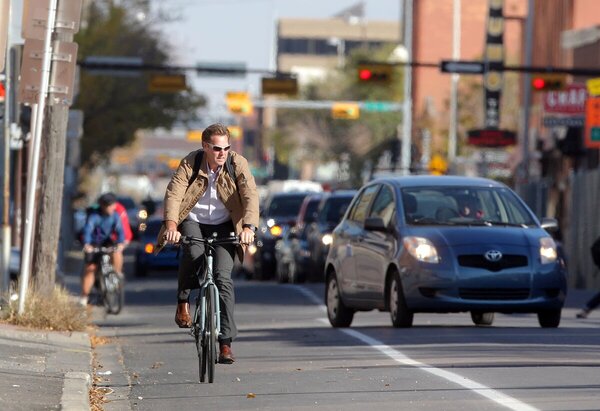
- On the left.
- On the right.Correct answer
- Straddling the line separating the different lanes.
Explanation
As a general rule, vehicles must travel on the right-hand side of the carriageway, leaving sufficient lateral clearance to pass oncoming vehicles safely.
This rule must not be confused with positioning within the lane. On urban roads, cyclists are to ride preferably in the centre of their lane when their safety and that of other road users allow it. If there are at least two lanes in each direction, they must ride in the right-hand lane and may use the other lanes to change direction or for safety reasons.
 Hint:
Hint:The general rule states that vehicles must travel on the right-hand side of the carriageway.
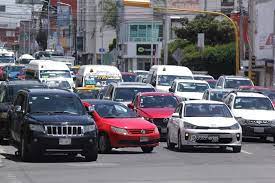
Question 2Must the warning signals used during the approach phase be maintained during the entry positioning phase?
- They must only be maintained on two-wheeled vehicles
- No, they must be replaced with others
- YesCorrect answer
Explanation
To safely execute a maneuver to enter a road, it is essential to follow the R.S.M. safety rule. This rule indicates that you must observe, signal, and then execute the maneuver. Part of this signaling includes maintaining the signals from the approach phase, such as using lights or your arm to indicate the intention to enter the road. This is crucial for other drivers to be aware of your movements and to act accordingly, thus avoiding dangerous situations.
Additionally, when entering a road, it is important to yield to vehicles already traveling on it, ensuring that you do not become an obstacle. This applies to all drivers, regardless of the type of vehicle they are driving. Proper and constant signaling throughout the entire maneuver is essential to maintain safety and traffic flow.
Therefore, the correct answer is that yes, the signaling from the approach phase must be maintained during the entry position phase, as it is an integral part of a safe and responsible maneuver when merging onto a road.
Hint:It is necessary to maintain the signaling of the approach phase during the maneuver of entering a road to ensure safety and yield to vehicles already in circulation.
Question 3Where should we drive in a two-way traffic tunnel?
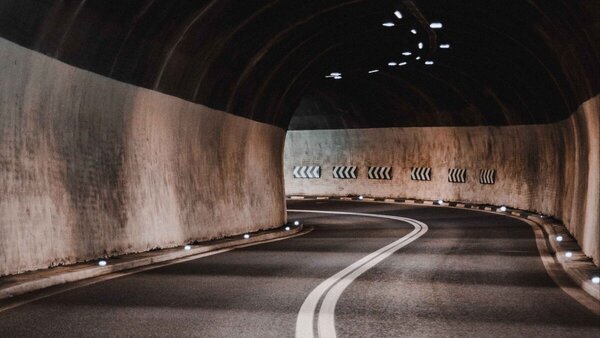
- As close to the right as possibleCorrect answer
- Along the center line of our lane
- As close as possible to the longitudinal lane-separation line
Explanation
To drive safely in a two-way tunnel, it is important to stay as close to the right as possible. This is due to several reasons:
- In case of an emergency or if the vehicle stops, it is necessary to move it to the right edge of the road. This facilitates the passage of emergency vehicles and minimizes the risk of obstructing traffic.
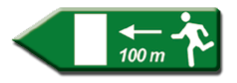
- Staying to the right also helps to maintain a safe distance from vehicles coming in the opposite direction, reducing the risk of head-on collisions.
- Additionally, driving close to the right edge facilitates compliance with the rule of maintaining a minimum safe distance from the vehicle in front, which is crucial in tunnels where visibility may be limited.
For these reasons, driving as close to the right as possible is the safest and most appropriate option in a two-way tunnel.
Hint:In a two-way tunnel, it is essential to drive as close to the right as possible to facilitate the passage of emergency vehicles and ensure safety in evacuation situations.
Question 4In a built-up area, except on a motorway or dual carriageway (autovía), where there are two or more lanes in the same direction marked by longitudinal road markings, the motorcycle may use…
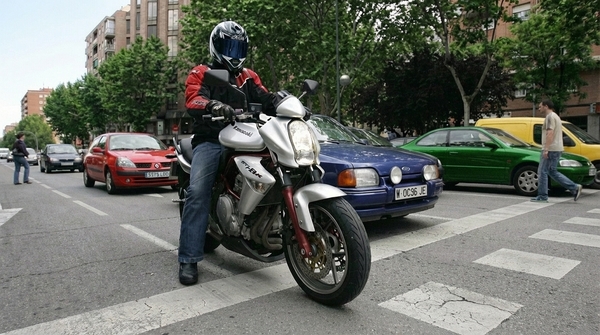
- The lane best suited to its destination.Correct answer
- The right-hand lane for travelling and the left-hand lane only for changing direction.
- The right-hand lane only.
Explanation
In this situation, the motorcycle may use the lane best suited to its destination, provided it does not obstruct traffic. It must only leave that lane to change direction, overtake, stop or park.
Hint:It may choose the most suitable lane provided it does not obstruct other road users.
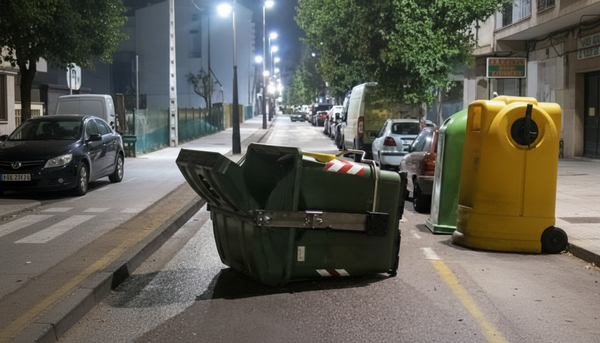
Question 5It is forbidden to leave on the road objects that may obstruct...
- free traffic flow only.
- free traffic flow, stopping or parking.Correct answer
- parking or stopping only.
Explanation
It is important not to leave objects on the road because they can hinder the free movement, stopping, or parking of other vehicles. Here we explain why:
- Loading and unloading operations: When these operations are carried out, it is crucial not to leave loads on the road, the shoulder, or in pedestrian areas. This is because objects on the road can cause damage to other vehicles or pedestrians and obstruct the normal flow of traffic.
- Dangerous stops and parking: A poorly parked vehicle can impede the passage of other vehicles, block access to homes or places, and be an obstacle for people with disabilities. This demonstrates that any object or vehicle obstructing the road affects both circulation and stopping and parking.
- Lines and markings on the roads: Zebra lines, for example, prohibit the circulation of vehicles in certain areas, which underscores the importance of keeping roads free of obstacles to ensure smooth and safe traffic.
Therefore, leaving objects on the road not only affects free movement but also stopping and parking, which justifies the complete prohibition mentioned in the correct answer.
Hint:Traffic regulations prohibit leaving objects on the road because they can obstruct circulation, stopping, and parking, affecting the safety and flow of traffic.
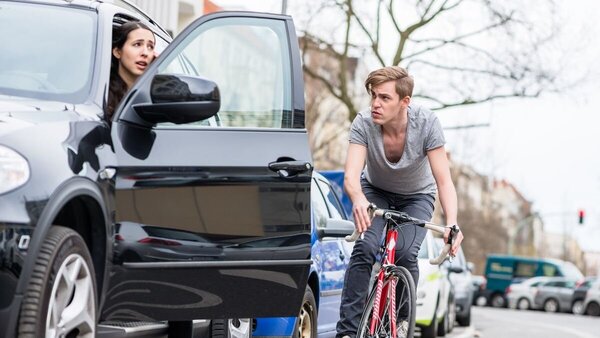
Question 6When there are obstacles that may force cyclists to change course, you must...
- maintain your speed and take care to obey road signs.
- sound your horn as you approach the cyclists to make them aware of your presence.
- bear in mind that cyclists may make a sudden movement.Correct answer
Explanation
When faced with an obstacle, a cyclist may suddenly change course, so you must anticipate this possible movement and be especially vigilant.
Hint:Anticipate that an obstacle may force a cyclist to change course.
Question 7When is it permitted to ride a personal mobility vehicle (VMP) in an urban pedestrian area?
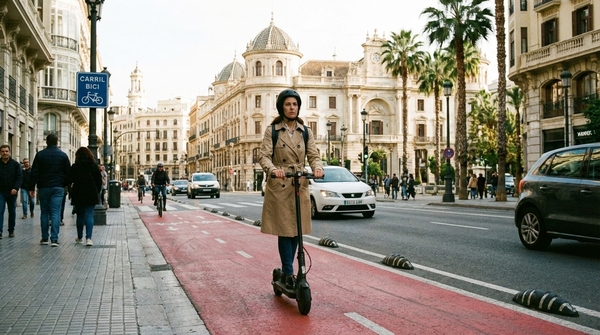
- Off the pavement, with municipal authorisation and priority for pedestrians, or on it if a person with reduced mobility is travelling at walking pace.Correct answer
- In any pedestrian area, without any conditions.
- Provided that you do not travel on the pavement.
Explanation
As a general rule, no vehicle may travel on the pavement. In other urban pedestrian areas, a municipal by-law may authorise shared use by pedestrians and VMP users, always with priority for pedestrians. In addition, a person with reduced mobility travelling on a VMP at walking pace is regarded as a pedestrian, so they may travel on the pavement under these special rules.
Hint:The rules distinguish pavements from other pedestrian areas and take account of which VMP user is regarded as a pedestrian.
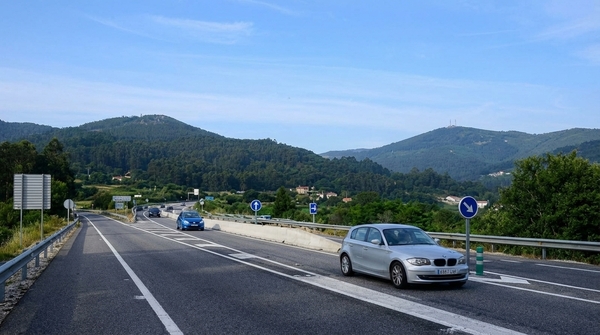
Question 8Can the roads we travel on have more than one carriageway?
- No
- YesCorrect answer
- Only roads outside built-up areas
Explanation
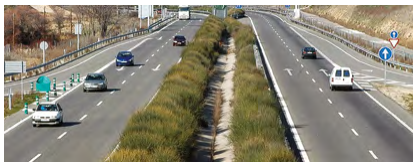
Roads are spaces where vehicles and pedestrians circulate. Within a road, the carriageway is the specific part designated for vehicle traffic. It is important to know that the same road can have multiple carriageways.
- In the case of motorways, these are a type of road that have separate carriageways for vehicles to travel in opposite directions. This ensures a safer and more efficient traffic flow.
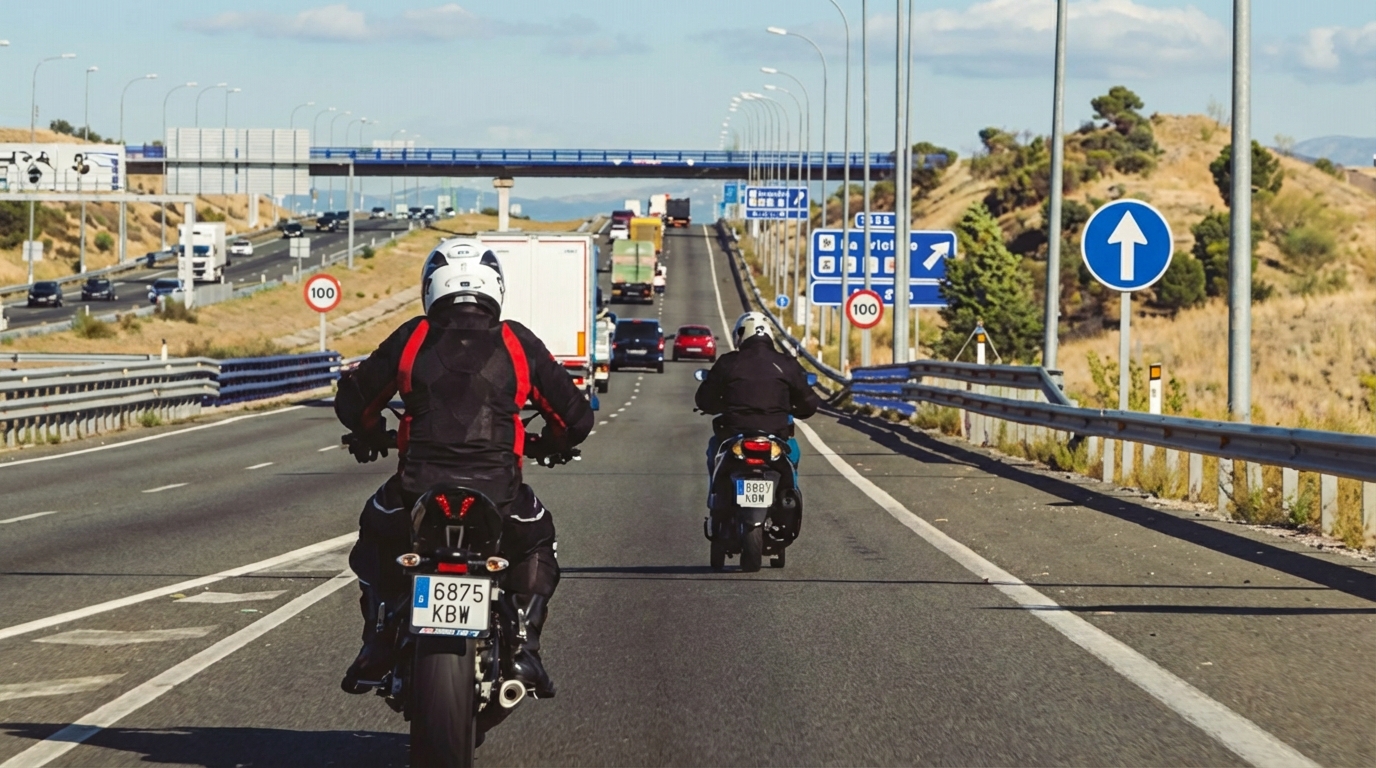
- Additionally, carriageways can have additional lanes in certain situations, such as when there is heavy traffic. These lanes are added to improve circulation and are marked with specific signs.
Therefore, it is correct to state that roads can have multiple carriageways, as this is common in different types of roads, such as motorways.
Hint:A single road can have multiple carriageways, as seen on highways, where each carriageway allows traffic in different directions for safe vehicle flow.
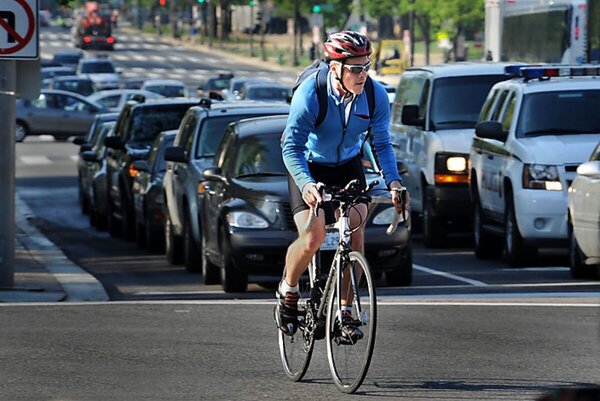
Question 9On a conventional road, during a long descent with bends and if safety permits, may a cyclist leave the shoulder?
- Yes.Correct answer
- No, they must always use the shoulder.
- They may use the whole lane.
Explanation
On a long descent with bends on a conventional road, a cyclist may leave the shoulder and use as much of the right-hand side of the carriageway as necessary if safety considerations permit. On a dual carriageway (autovía), by contrast, they must ride on the shoulder in all cases.
Hint:On long descents with bends, the exception is subject to safety considerations and does not apply on dual carriageways (autovías).
Question 10A combination of vehicles with a length of 7.30 meters is traveling on a road with three lanes in each direction. Which lanes may it use?
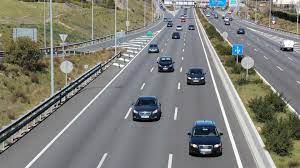
- The right-hand lane and the lane immediately to its left, only when traffic or road conditions make it advisable.Correct answer
- Only the right-hand lane.
- Any of them, indiscriminately.
Explanation
To understand why the correct answer is that the set of vehicles can use the right lane and the immediate one only when circumstances advise it, we must consider the traffic regulations for long vehicles on roads with multiple lanes.
- Sets of vehicles measuring more than seven meters in length, like the one mentioned in the question, have specific restrictions on roads with three or more lanes in the same direction.
- These vehicles must primarily drive in the right lane. However, they can use the lane immediately to the right when traffic or road conditions justify it, as long as they do not obstruct other drivers.
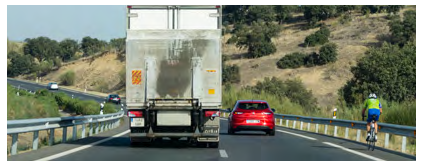
- This rule ensures that traffic flows in an orderly and safe manner, allowing slower or longer vehicles not to interfere with faster traffic in the left lanes.
- Therefore, the option to use the lane immediately to the right only in certain circumstances is a measure to maintain safety and efficiency on the road.
Hint:Vehicles with a length exceeding 7 meters must primarily drive in the right lane, but they may use the lane immediately to the left only when traffic or road conditions suggest it.
Question 11What must be done once the correct position to occupy on the roadway has been selected?
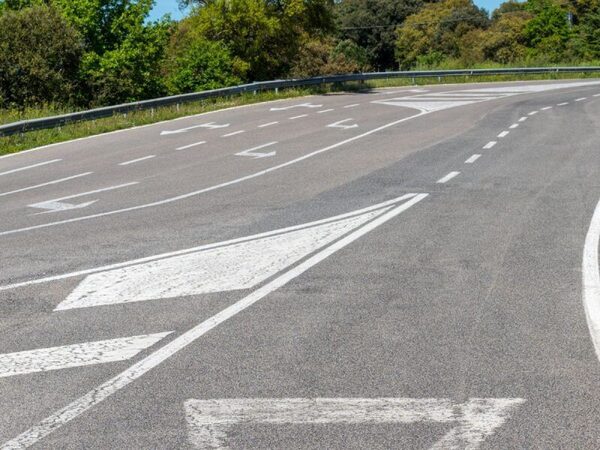
- Observe the traffic and give way if necessary
- Adjust your speed to the change of direction or crossingCorrect answer
- Increase your speed to 20 km/h above the minimum speed limit
Explanation
To make a change of direction or crossing safely, it is essential to adjust the speed. This means adapting the vehicle's speed to the type of maneuver to be performed, ensuring that other vehicles or pedestrians are not endangered.
- Safe maneuvers: When performing any maneuver, such as a change of direction, it is crucial to do so at an appropriate speed. This allows maintaining control of the vehicle and reacting to any unforeseen events.
- R.S.M. safety rule: This rule emphasizes the importance of observing, signaling, and then performing the maneuver at a speed that does not endanger other road users. Adjusting the speed is an essential part of this rule to ensure safety.
- Adaptation to the road: When entering a road or changing lanes, it is necessary to adapt to the speed of the existing traffic. This helps to integrate smoothly and safely, avoiding being an obstacle for other drivers.
In summary, adjusting the speed when making a change of direction or crossing is crucial to ensure road safety and avoid accidents.
Hint:It is essential to adjust the speed when performing a maneuver to ensure it is carried out safely and without endangering other road users.
Question 12The following vehicles can obtain the ECO environmental label if they comply with the maximum emission levels indicated for that label...
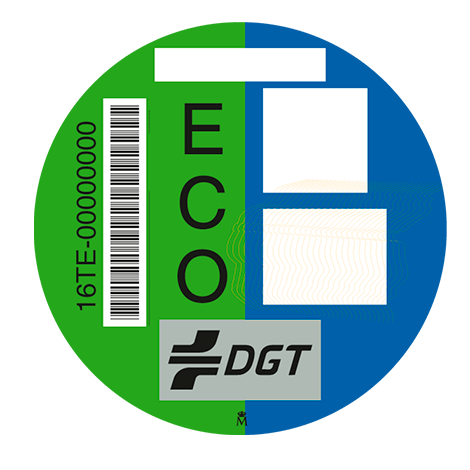
- Compressed natural gas (CNG), liquefied natural gas (LNG) or liquefied petroleum gas (LPG) vehicles.Correct answer
- Plug-in hybrid vehicles with a minimum electric range of 40 km.
- Vehicles powered exclusively by an electric battery (BEV).
Explanation
ECO sticker: which vehicles can have it
The ECO sticker (blue and green) is granted to vehicles that pollute little and comply with maximum emission limits established by the DGT.
The ECO label may be used by:
- Plug-in hybrids with electric range of less than 40 km.
- Non-plug-in hybrids (HEV).
- Vehicles that use gaseous fuels, such as:
- Compressed natural gas (CNG)
- Liquefied natural gas (LNG)
- Liquefied petroleum gas (LPG)
The essential condition is that these vehicles remain below the maximum emission levels set for the ECO sticker. If they exceed them, they cannot obtain this label.
Hint:The ECO label is granted, among others, to vehicles that use gaseous fuels (CNG, LNG or LPG), provided they comply with the maximum emission limits established for this label.
Question 13If you see this sign and your vehicle can exceed 80 km/h, which lane must you drive in?
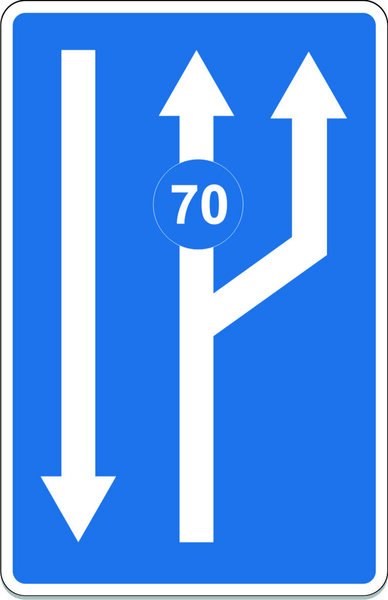
- In the second lane, because the right-hand lane is reserved for vehicles that cannot exceed 80 km/h.
- As a general rule, and whenever conditions allow, in the right-hand lane.Correct answer
- In the lane with the least traffic.
Explanation
Right-hand lane and minimum speed sign (80 km/h)
- General rule: drive in the right-hand lane whenever circumstances permit.
- The circular blue sign with “80” indicates a mandatory minimum speed in that lane.
- That lane should only be used if you can maintain at least 80 km/h and you need it (for example, to overtake or for traffic flow).
- After the manoeuvre, return to the right-hand lane.
- Being able to exceed 80 km/h does not oblige you to remain in that lane; the rule to keep to the right prevails.
Question 14Under no circumstances are pedestrians using skateboards or roller skates allowed to...
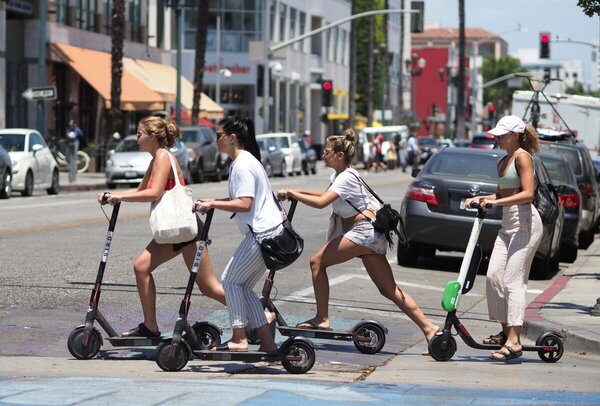
- be towed by other vehicles.Correct answer
- travel on the roads authorised by the municipal by-law, complying with its conditions.
- travel in the areas authorised by the municipal by-law, complying with its conditions.
Explanation
Pedestrians who use skateboards or roller skates are subject to certain restrictions when travelling. One of the most important rules is that they are not allowed to be towed by other vehicles. This is because being towed by a vehicle can be extremely dangerous both for the pedestrian and for other road users. In addition, this practice could cause serious accidents due to a lack of control and stability.
From 1 October 2026, the municipal authority regulates the roads and areas where people using roller skates or skateboards may travel, as well as the conditions that apply. Therefore, answers 2 and 3 describe places authorised by the by-law, rather than something that is prohibited in all circumstances.
Hint:The ban on pedestrians using skateboards or roller skates being towed by other vehicles is essential to prevent extremely dangerous and potentially fatal situations.
Question 15Are cycles allowed to be ridden on the pavement...?
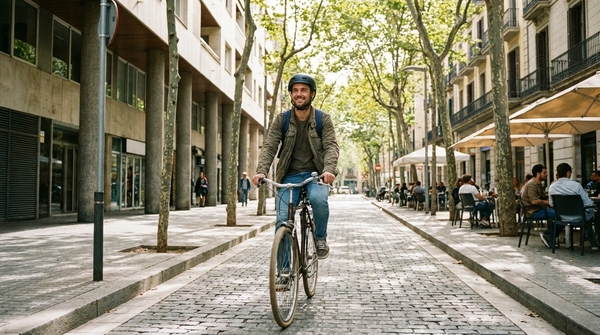
- As a general rule, no, except where a by-law allows a child under twelve to ride a bicycle under the supervision of an adult who is on foot.Correct answer
- if there are no pedestrians they could obstruct.
- Provided there is no dedicated lane for them.
Explanation
Riding cycles on the pavement
As a general rule, vehicles of any kind are prohibited from travelling on the pavement. However, a municipal by-law may allow a child under twelve to ride a bicycle on it, provided they are under the supervision of an adult who is on foot. This exception does not apply to personal mobility vehicles (VMP).
The absence of a dedicated lane or of pedestrians does not in itself permit travelling on the pavement.
Hint:There is a general prohibition, with a possible municipal exception for a child under twelve riding a bicycle under the supervision of an adult on foot.
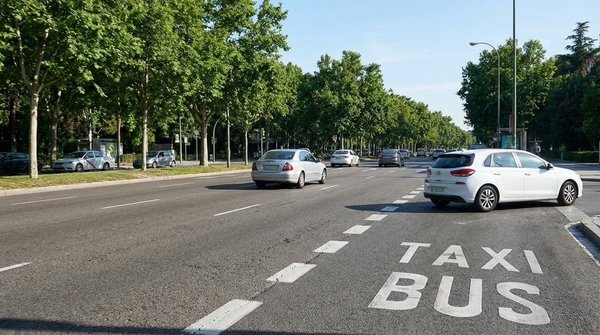
Question 16Is a car allowed to use a section of a bus lane that is marked by a broken line?
- No, it is always prohibited.
- Yes, but only to turn right.
- Yes, to carry out any manoeuvre other than stopping, parking, turning around or overtaking.Correct answer
Explanation
A bus lane is a space on the road primarily intended for the circulation of buses and, in some cases, taxis. These lanes are separated from the rest by a wide white line. However, when the lane is marked by a broken line, other vehicles, such as passenger cars, are allowed to use it for certain maneuvers.
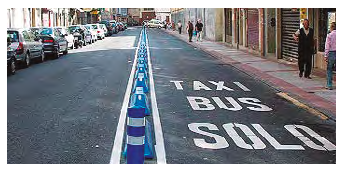
The broken line allows drivers to cross or drive over it in specific situations, such as when the lane is less than three meters wide and necessary. This means that a passenger car can use the bus lane marked by a broken line for maneuvers like changing lanes or merging into another, as long as it does not stop, park, change direction, or overtake.
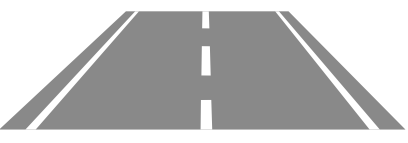
Therefore, the correct answer is that it is allowed for a passenger car to use a section of the bus lane marked by a broken line, but only to perform specific maneuvers that do not include stopping, parking, changing direction, or overtaking.
Hint:The broken line in the reserved lane allows passenger cars to use it for certain maneuvers, as long as they are not stopping, parking, changing direction, or overtaking.
Question 17Is a pedestrian allowed to ask for a lift in the forecourt of a toll station on a motorway or autovía?

- Yes, taking the utmost care
- Yes, in the forecourts adjoining the toll station
- NoCorrect answer
Explanation
No. On any section of a motorway or autovía, pedestrians are prohibited from asking for a lift. This prohibition includes the forecourts of toll stations.
Hint:The prohibition applies to pedestrians and also covers the forecourts of toll stations.
Question 18Is it permitted for groups of bicycles not to keep a safe distance from the vehicle in front of them?

- No, because all vehicles must follow this rule.Correct answer
- No, it is only allowed when it is a single bicycle.
- Yes, it is permitted, exercising extreme caution.
Explanation
All vehicles, including bicycles, must maintain a safe distance from the vehicle in front of them. This rule is essential to ensure road safety and prevent accidents.
- Safe distance: It is crucial that all vehicles, without exception, maintain an adequate distance to have reaction time in case of sudden braking by the vehicle ahead.
- Bicycles in groups: Although bicycles can travel in groups, they must follow the same safety rules as other vehicles, which includes maintaining a safe distance.
- Exceptions for bicycles: Bicycles have certain exceptions, such as being able to ride two abreast in some situations, but this does not exempt cyclists from maintaining a safe distance from other vehicles.
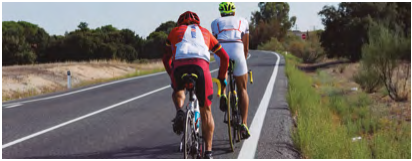
In summary, all vehicles, including bicycles, must follow the rule of maintaining a safe distance to ensure safe and orderly traffic on the roads.
Hint:All vehicles, including bicycles, must maintain an adequate safety distance to avoid collisions and ensure safety on the road.
Question 19What must we be particularly careful with when overtaking on a motorway?
- The traffic beacons.
- The blind spot.Correct answer
- The tyres of other road users.
Explanation
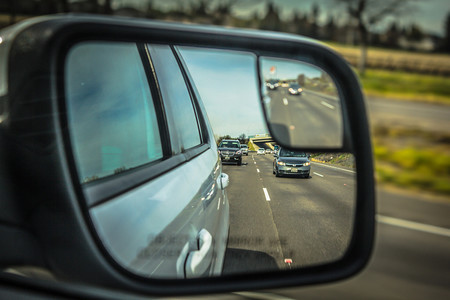
When overtaking on a motorway, it is crucial to be careful with the blind spot. This is an area around the vehicle that cannot be directly seen through the rearview mirrors.
- Defensive driving: It is important to maintain an adequate distance and stay out of the blind spot of other vehicles to avoid collisions. This is especially relevant when changing lanes or overtaking, as other drivers may not see you if you are in their blind spot.
- Overtaking safely: When overtaking, you must ensure that there are no vehicles in your blind spot before changing lanes. This involves looking over your shoulder to check that the road is clear.
- Completing the overtaking: Once you have overtaken, return to your lane as soon as possible, ensuring that there are no vehicles in your blind spot and without forcing other drivers to change their speed.
Paying attention to the blind spot is essential for safe overtaking and avoiding accidents on the motorway.
Hint:It is crucial to be cautious of the blind spot when overtaking, as it is an area that cannot be seen from the mirrors and there may be vehicles present without being detected, which could cause collisions.
Question 20What should a driver pay attention to in order to know if a road is one-way?
- The other vehicles.
- What their GPS says.
- The road signs.Correct answer
Explanation
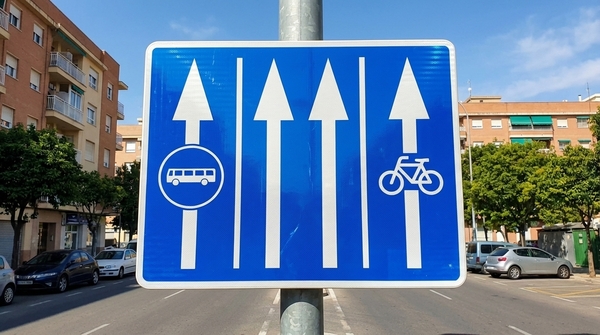
To determine if a road is one-way, it is essential to pay attention to the signage. Vertical signs are plates that are fixed on posts or road structures and provide crucial information about the direction and flow of traffic. These signs can warn of dangers, mandate or prohibit certain actions, and inform and guide drivers.

In the case of one-way streets, vertical signs will indicate if traffic is allowed only in one direction. For example, a no-entry sign at one end of the street would indicate that it is a one-way street.
Therefore, it is always important to pay attention to these signs to correctly understand the direction of the road and avoid driving in the wrong direction.
Hint:Signage is the main source of information to determine if a road is one-way, as vertical signs clearly indicate traffic regulations.